






If you’ve never owned a Murphy bed before, a few logistical questions come up fast:
- Can it open on its own?
- Do you need to lock it every time you close it?
- What happens if kids or pets are in the room?
These are some of the most common questions people have before bringing a wall bed into their home—and they’re very good ones to ask.
Murphy beds are built with safety as a top priority, and many models include built-in locks and other features to help keep the bed securely in place. However, knowing how to lock a Murphy bed depends on the manufacturer, the age of the bed, and the specific mechanism it uses. Understanding how your model works is the first step to using it safely and confidently.
Why Murphy Bed Locking Mechanisms Matter
Between the weight of the bed face and the mattress, an unsecured Murphy bed can be a real hazard if it isn’t installed, maintained, or operated correctly. Locking mechanisms play an important role in helping to:
- Prevent unintended movement while the bed is stored or in use.
- Keep the bed securely positioned, depending on how the manufacturer designed it.
- Protect children, pets, and other household members from accidentally triggering the bed.
That said, a Murphy bed’s locking mechanism is only one safety element. It works alongside the bed’s mounting hardware, quality materials, and proper installation. A Murphy bed that’s securely anchored to wall studs and built from solid materials will behave safely whether or not it has a dedicated lock, but for extra peace of mind, especially in homes with kids, a lock adds a meaningful layer of protection.

Understanding Murphy Bed Mechanisms and Locking Systems
Locking a Murphy bed doesn’t always mean the same thing from one bed to the next. It helps to understand the difference between a locking mechanism and a counterbalance mechanism.
A counterbalance system (typically springs or pistons) is what makes the bed easy to lift and lower in the first place. It offsets the weight of the mattress and bed face so you’re not wrestling with the whole thing by hand.
A locking mechanism, on the other hand, is what keeps the bed from moving once it’s positioned. The two often work together, but they’re designed for different purposes.
Different Murphy Bed Locking Mechanism Types
Wilding Wallbeds builds Murphy beds using a few different mechanism types. How each one handles security looks a little different:
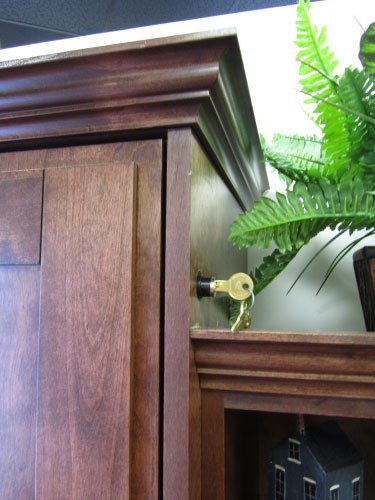
- Spring Lift Mechanism (used in Studio Series and Sofa Murphy beds): This system is designed to rest naturally in the “up” position, so there’s no risk of the bed falling open under its own weight. These beds don’t come standard with a lock, but an optional key lock can be added at the top of each sideboard for households that want that extra layer of security, which is often a good call for a kid’s room.
- Piston Lift Mechanism (used in HomeFront Series beds): These beds come standard with a locking leg design. The bed physically cannot lower until both legs are lifted into place, which means it can only be opened by someone who deliberately unlocks it first.
- Murphy Frame: A simpler, closet-friendly option that uses springs to assist the lift, typically installed behind closet doors or in bookcase-style builds.
If you’re comparing options for your own home, it’s worth learning which Murphy bed mechanism might be the right fit, since the mechanism you choose will directly affect how the bed locks (or doesn’t) once it’s installed.
Whatever mechanism your bed uses, always follow the manufacturer’s instructions for your specific model rather than assuming your bed works like one you’ve seen elsewhere.
7 Best Practices for Safely Securing a Murphy Bed
A few habits go a long way toward knowing how to secure a Murphy bed and make it function the way it should:
- Make sure the bed is fully opened or fully closed before use—never leave it halfway.
- Engage any locking mechanism exactly as the manufacturer describes it for your model.
- Never force a mechanism that doesn’t move smoothly. Resistance usually means something needs attention, not more muscle.
- Inspect hardware and moving parts periodically for wear, loose bolts, or squeaking.
- Keep the surrounding area clear while opening or closing the bed.
- Follow the manufacturer’s recommended maintenance schedule.
- If a locking mechanism looks damaged or isn’t functioning properly, stop using the bed and reach out to the manufacturer rather than attempting a DIY fix.
Common Questions About How to Lock a Murphy Bed
-
Do all Murphy beds have locking mechanisms?
Not all of them. Some beds, like piston-driven models, include a locking leg as a standard safety feature. Others, like certain spring-lift beds, are built to stay safely closed on their own and only need a lock if the homeowner wants one added.
-
Should a Murphy bed be locked when it’s closed?
It depends. If your bed came with a lock, use it according to the manufacturer’s guidance. If your bed doesn’t include one, proper installation and a well-maintained mechanism are typically enough to keep it securely closed.
-
Can a Murphy bed open accidentally?
A well-built, correctly installed Murphy bed is designed to require some deliberate effort to open. It shouldn’t just fall open on its own. That said, homes with young children or curious pets often benefit from an added lock for extra reassurance.
-
What should I do if my Murphy bed won’t stay closed or won’t lock properly?
Stop using the bed and check the manufacturer’s troubleshooting guidance first. If the issue continues, it’s time to contact the manufacturer directly rather than guessing at a fix.
-
Can I replace a damaged Murphy bed locking mechanism?
This isn’t a recommended DIY project. Locking and lift mechanisms are engineered to very specific tolerances, so replacement parts and installation should come from or be approved by the manufacturer.
Learning How to Lock a Murphy Bed
Murphy bed locking mechanisms are part of a broader safety picture that includes proper installation, quality materials, and regular maintenance. The best thing any homeowner can do is get familiar with how their specific bed works and stick closely to the instructions that came with it.
If you’re exploring Murphy beds for your own home, take a look at Wilding Wallbeds’ full lineup to find a mechanism and style that fits your space, or get in touch with the team with any questions about safety features, mechanisms, or choosing the right model for your home.