




The need to be creative with small spaces has increased as apartment living has changed. Rising housing costs, smaller floor plans, remote work, and differing lifestyle needs have forced many people to rethink how they use their living spaces.
A room that was once meant for one purpose may now need to function as a bedroom, office, guest room, workout space, or all four throughout a single week. That is one reason interest in Murphy beds for apartment living has grown. Unlike bulky furniture layouts that permanently occupy valuable floor space, Murphy beds offer flexibility, allowing rooms to serve multiple purposes without sacrificing comfort.
Why Small Apartments Require Smarter Furniture Solutions
Living in a smaller apartment often means every square foot matters. Traditional furniture arrangements can quickly make compact spaces feel crowded and limited, especially when a single room needs to accommodate multiple daily activities.
Remote work has made this even more noticeable. Many apartment residents now need a dedicated workspace, yet lack an extra bedroom to use as a home office. Kitchen tables, couches, and small desks may work temporarily, but they often create clutter and make it harder to separate work from personal life.
Small apartments also create unique challenges, such as:
- Limited storage space
- Difficulty accommodating overnight guests
- Reduced floor space for daily movement
- Multipurpose room demands
- Lack of privacy in studio layouts
- Furniture overcrowding
Traditional bed setups are among the biggest obstacles. A permanent bed can consume a large portion of the room around the clock, leaving little flexibility for anything else.
This is one reason multi-functional furniture solutions have become more popular with homeowners and renters looking to use their spaces more efficiently. A Murphy bed has become one of the most practical options because it can allow an apartment to function differently throughout the day. Homeowners and renters can explore real-life Murphy bed examples for tiny homes and small spaces to see how flexible layouts can dramatically improve livability.
Why Murphy Beds Are Great for Apartments
A small apartment Murphy bed saves space, but it also changes how a room functions. Unlike traditional beds that permanently occupy floor space, Murphy beds fold vertically or horizontally into cabinetry or wall systems when not in use. This feature allows the same room to serve various purposes without feeling cramped.
1. Reclaiming Floor Space During the Day
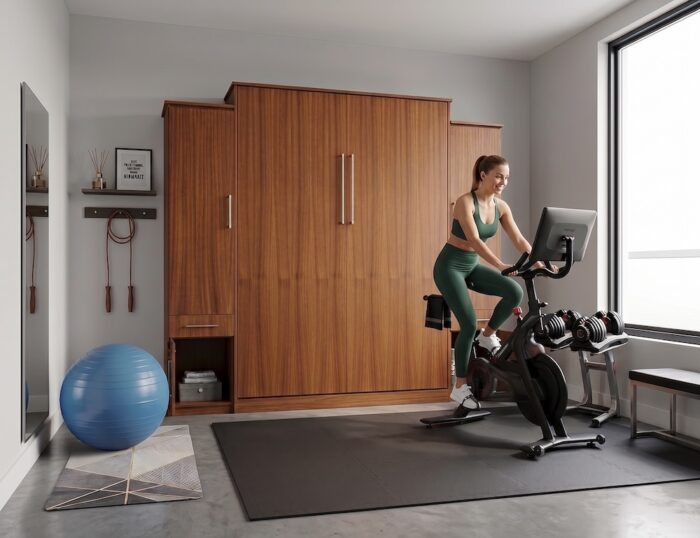
One of the biggest advantages of a Murphy bed for studio apartment living is the ability to open up usable floor space during the day.
Instead of navigating around a bed 24 hours a day, residents can create:
- Home offices
- Exercise areas
- Reading spaces
- Seating areas
- Hobby or creative workspaces
The flexibility can make even smaller apartments feel much larger and more functional.
2. Creating True Dual-Purpose Rooms
Murphy beds are especially valuable for people who need a single room to accommodate multiple activities.
- A guest room can quickly become a productive office.
- A studio apartment can maintain a more open, living-room feel during the day.
- A flex room can comfortably support both sleeping and work needs without requiring various furniture pieces.
Many apartment residents use Murphy beds specifically because they improve everyday livability rather than simply providing occasional convenience. For additional layout ideas, explore creative Murphy bed floor plans and room layouts.
3. Better Comfort Than Sleeper Sofas
Comfort matters in long-term apartment living. Unlike many sleeper sofas or futons that prioritize compactness over sleep quality, Murphy beds use real mattresses designed for nightly use. This factor creates a more comfortable long-term sleeping solution without sacrificing space efficiency.
Wilding Wallbeds exclusively offers luxury wall bed mattress options designed for comfort and durability, so apartment residents can have their space and sleep well in it, too.
4. Supporting Long-Term Apartment Living
Murphy beds are no longer viewed as temporary or novelty furniture; people now use them as part of a long-term lifestyle approach to compact living. As apartment costs continue to rise in many cities, residents are increasingly looking for ways to make existing spaces work better for longer periods. A Murphy bed can help a smaller apartment remain practical and comfortable without requiring a move to a larger home.

Can You Install a Murphy Bed in an Apartment?
Yes. But the right setup depends on several important factors, including the apartment layout, wall structure, lease restrictions, and the type of Murphy bed being installed.
Rental Property Considerations
Before installing a Murphy bed, renters should carefully review their lease agreements for any restrictions involving wall modifications or permanent fixtures. Some landlords allow Murphy bed installation if the apartment is restored before move-out. Others prohibit wall anchoring or structural modifications entirely.
Because policies vary, renters should always:
- Review lease terms carefully
- Ask landlords for written approval
- Understand repair responsibilities before installation
- Confirm any restrictions involving wall anchoring or cabinetry
Written approval can help prevent misunderstandings later.
Wall-Mounted vs. Freestanding Murphy Beds
Not all Murphy beds install the same way. Some systems require wall anchoring for stability, while others use freestanding cabinet-style designs that minimize permanent wall modifications.
For renters, freestanding or less invasive systems may offer greater flexibility. Professional installation is often recommended to ensure the bed is installed safely and properly.
Apartment Ceiling Height and Space Planning
Apartment dimensions can also influence the best Murphy bed configuration. Vertical Murphy beds typically require taller ceilings but use less horizontal wall space. Horizontal Murphy beds are often shorter and wider, which can work better in apartments with lower ceilings or unusual layouts.
Another consideration is the lift mechanism. Piston mechanisms generally protrude less than traditional spring systems, making them especially useful in compact apartments or rooms with tighter clearance needs.
Best Types of Murphy Beds for Apartments and Studios
Different apartment layouts benefit from different Murphy bed styles.
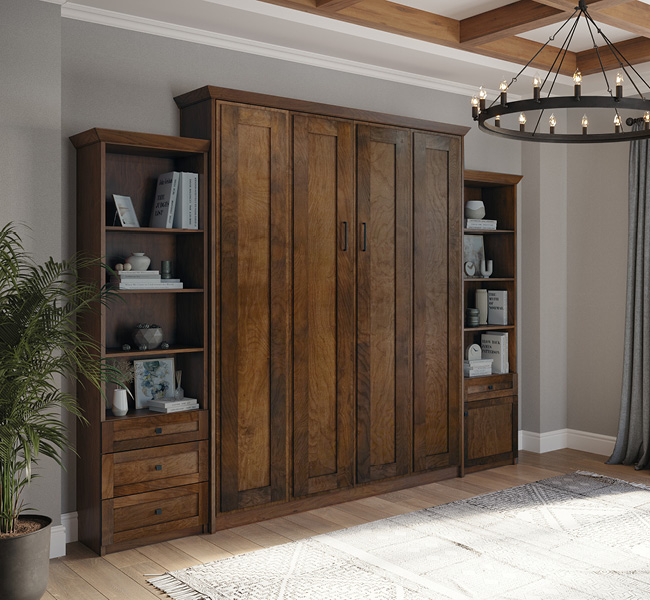
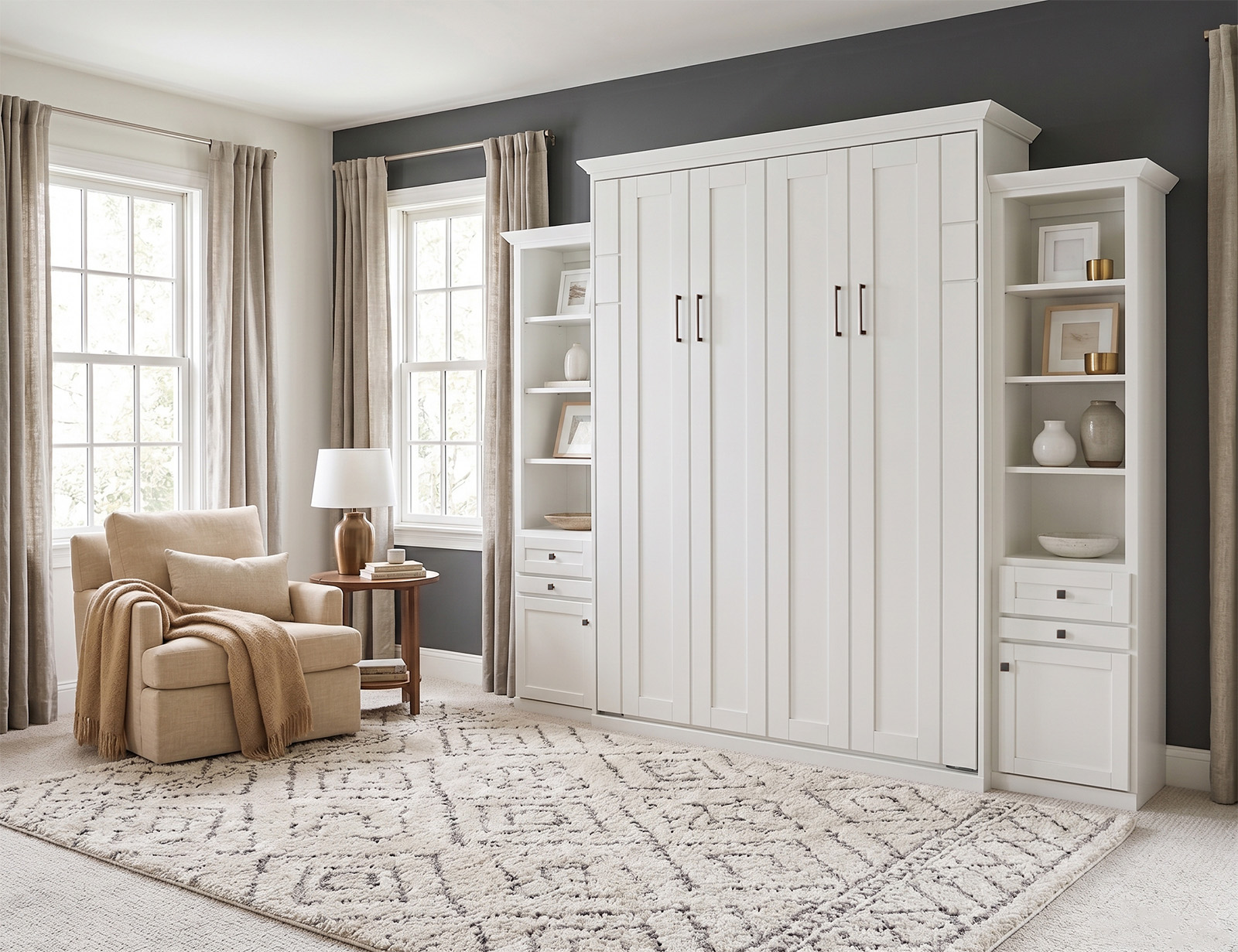
- Vertical Murphy beds: These are the most common option because they maximize floor space while maintaining a relatively narrow footprint. They work especially well for studio apartments, guest rooms, dedicated flex spaces, and apartments with higher ceilings.
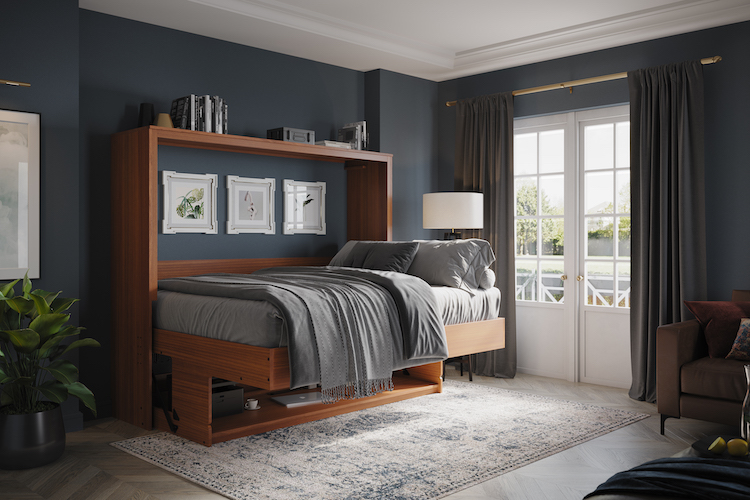
- Horizontal Murphy beds: Horizontal models are often a better fit for apartments with lower ceilings or wider wall availability. Because they sit lower to the ground when folded away, they may feel more balanced in smaller rooms or compact layouts.
- Murphy desk beds: Remote workers often benefit from them because they provide a workspace and a sleeping area in the same room. Instead of sacrificing an entire room for a home office, apartment residents can maintain a productive workspace during the day while still having a dedicated spot to sleep at night.
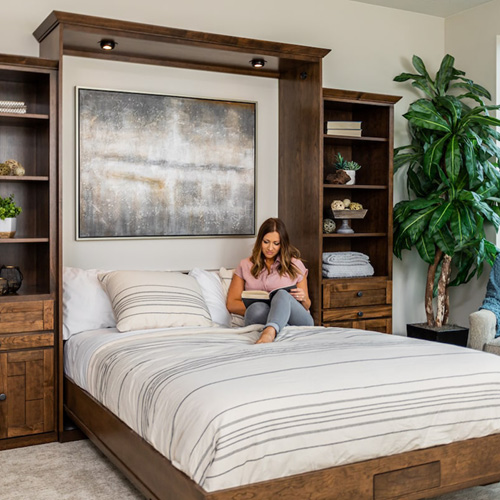
- Murphy beds with storage: Integrated shelving, cabinets, and storage systems can further improve apartment organization by reducing the need for extra furniture. This setup can help a smaller apartment feel cleaner, more open, and less cluttered.
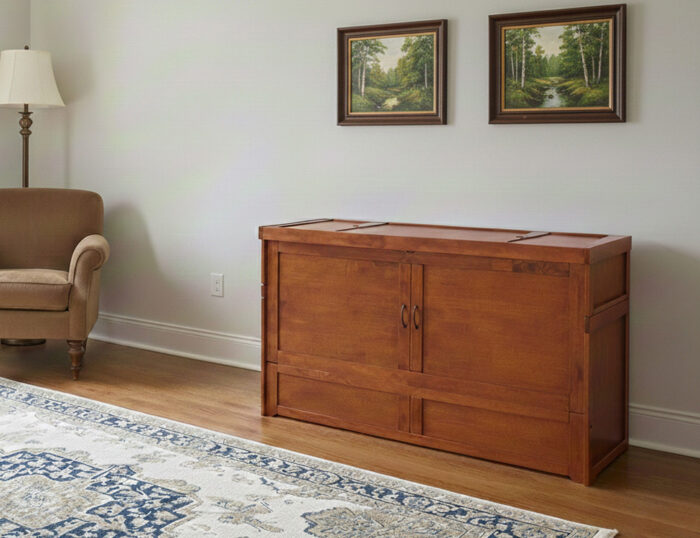
- Murphy Cabinet Beds: Murphy Cabinet beds are perfect for apartments because they do not need to be mounted to the wall. If that’s a concern, a Murphy Cabinet Bed is the best option.
Make Small Apartment Living More Functional
Murphy beds are available in a wide variety of styles and configurations designed specifically for apartments, studios, and multipurpose living spaces.
If you’re exploring ways to maximize your apartment or studio, contact Wilding Wallbeds to find a custom solution that fits your space and lifestyle.